
Gut health guide
Why your gut matters more than you think
Your gut does far more than digest food. It shapes your immune system, talks to your brain and is home to trillions of microbes. Here is what peer-reviewed research shows, in plain language.

~38 trillion
bacterial cells live in the average human body, mostly in the colon, roughly equal to the number of human cells (Sender et al., PLOS Biology, 2016).
~70%
of the body's immune tissue is associated with the gut (gut-associated lymphoid tissue).
~90%
of the body's serotonin is made in the gut, largely by enterochromaffin cells influenced by gut bacteria (Yano et al., Cell, 2015).
What is the gut microbiome?
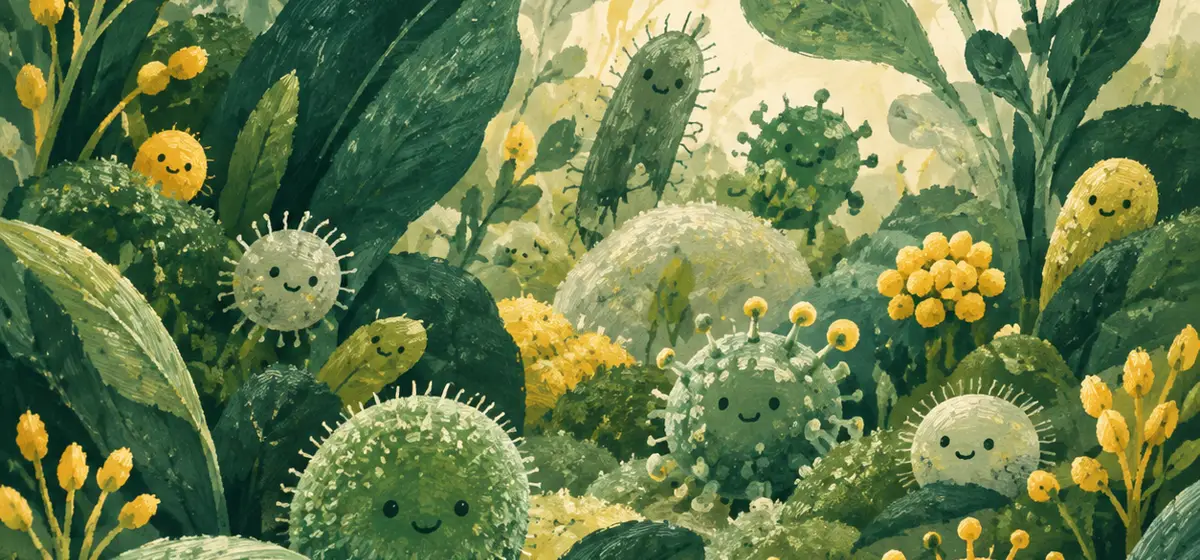
Your gut microbiome is the community of bacteria, fungi, viruses and other microbes living in your digestive tract. Thousands of species have been identified, and every person's mix is different.
These microbes help break down fibre we can't digest on our own, producing short-chain fatty acids such as butyrate, which feed the cells lining the colon and help maintain the gut barrier. They also help make certain vitamins, including vitamin K and some B vitamins.
The gut-brain axis

The gut and brain are in constant two-way communication. Scientists call this the gut-brain axis. It runs through the vagus nerve, the immune system, hormones and chemical messengers produced by gut microbes.
The gut has its own nervous system, the enteric nervous system, with hundreds of millions of neurons. That is one reason stress can upset digestion, and digestive problems can affect mood.
Animal studies show gut bacteria can influence stress responses and behaviour. In humans, research links microbiome differences to conditions such as depression and anxiety, though much of this evidence is still associative and researchers are working to establish cause and effect (Cryan et al., Physiological Reviews, 2019).
Gut health and immunity
A large share of immune cells sit along the gut wall, where they learn to tell harmful microbes from harmless ones. A diverse microbiome helps train this system and competes with disease-causing bacteria for space and nutrients.
Antibiotics can save lives, but they can also reduce microbial diversity for weeks to months. This is one reason doctors encourage using them only when needed.
Beyond digestion
Researchers have found links between the gut microbiome and metabolic health, inflammation, skin and women's health. For example, the vaginal microbiome is usually dominated by Lactobacillus species, which help keep pH slightly acidic, and some of these bacteria may travel from the gut.
Many of these connections are active areas of research. Associations are well documented; specific treatments based on them are still being tested.
What research says supports a healthy gut
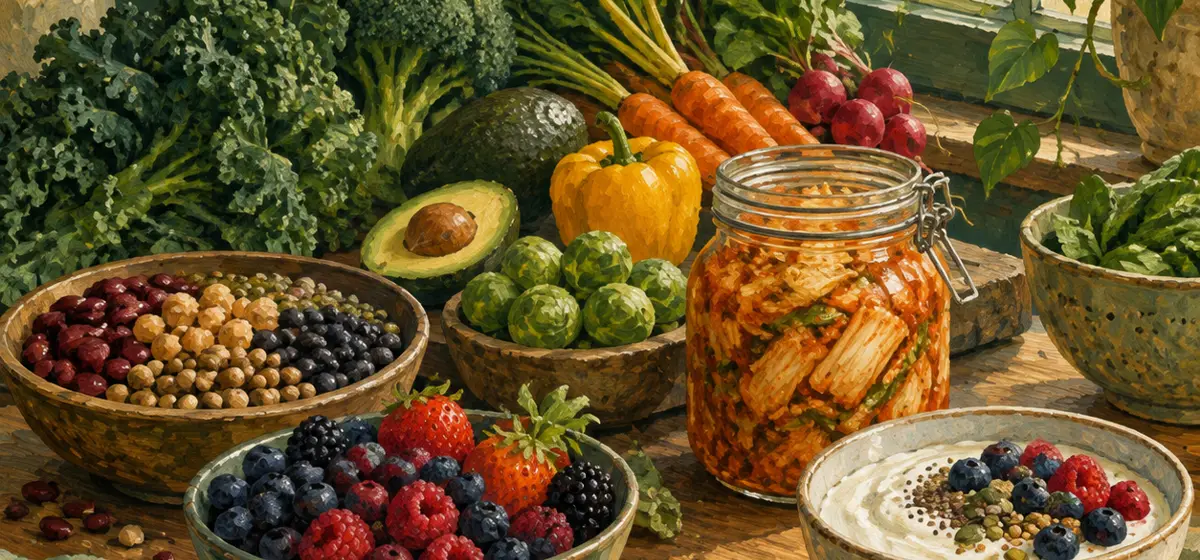
- Fibre and plant variety. The American Gut Project found people eating 30 or more different plant types a week had more diverse gut microbes than those eating 10 or fewer (McDonald et al., mSystems, 2018).
- Fermented foods. A Stanford randomised trial found a diet high in fermented foods such as yogurt, kefir and kimchi increased microbiome diversity and lowered markers of inflammation (Wastyk et al., Cell, 2021).
- Sleep, movement and stress. Regular exercise is associated with greater microbial diversity, and chronic stress can alter gut function through the gut-brain axis.
- Probiotics. Some specific strains have evidence for specific uses, such as reducing antibiotic-associated diarrhoea. Effects depend on the strain, dose and person, so one probiotic is not interchangeable with another.
- Antibiotics only when needed, and taken exactly as prescribed.
This page is for general information only and is not medical advice. Talk to your healthcare provider before changing your diet or starting any supplement.